
What is Autism?
Autism Spectrum Disorder (ASD) is a developmental disability that can cause significant social, communication and behavioral challenges. There is often nothing about how people with ASD look that sets them apart from other people, but people with ASD may communicate, interact, behave, and learn in ways that are different from most other people. The learning, thinking, and problem-solving abilities of people with ASD can range from gifted to severely challenged. Some people with ASD need a lot of help in their daily lives; others need less.
Signs & Symptoms
Signs & Symptoms of Autism Spectrum Disorder (ASD)
Autism Spectrum Disorder (ASD) affects how a person communicates, interacts with others, and experiences the world. Signs typically appear in early childhood and may continue throughout the lifespan. While each individual is unique, certain behavioral patterns may suggest the need for a professional evaluation.
Below are commonly observed signs and symptoms, consistent with guidance from the Centers for Disease Control and Prevention (CDC) and diagnostic descriptions in the DSM-IV.
Social Interaction Differences
Children or adults with ASD may:
-
Not Point To Show Interest (e.g., not pointing at an airplane flying overhead)
-
Not Look At Objects When Someone Points To Them
-
Have Difficulty Relating To Others or may show limited interest in peers
-
Avoid Eye Contact or appear more comfortable engaging alone
-
Have Challenges Forming Or Maintaining Friendships
-
Show Limited Shared Enjoyment, such as not showing or bringing objects to share
Communication Differences
Individuals may:
-
Experience Delayed Speech Or Language Development
-
Use Unusual Speech Patterns, including repeating words or phrases (echolalia)
-
Have Difficulty Expressing Needs using words or gestures
-
Appear Unresponsive When Spoken To, yet respond to other sounds
-
Struggle With Back-And-Forth Conversation
-
Show Limited Pretend Or Imaginative Play (e.g., may not pretend to “feed” a doll)
Repetitive Behaviors & Routines
Individuals may:
-
Repeat Movements Or Actions (hand-flapping, rocking, lining up objects)
-
Repeat Words, Phrases, Or Routines
-
Have Strong Resistance To Changes In Schedule Or Environment
-
Develop Intense Interests in specific topics or activities
Sensory Processing Differences
Individuals may:
-
Have Unusual Reactions To Sensory Inputs such as sounds, textures, tastes, lights, or smells
-
Show High Or Low Sensitivity To Sensory Experiences
-
Seek Specific Sensory Input (e.g., watching objects spin, smelling items)
Developmental Patterns
Some individuals may:
-
Lose Previously Acquired Skills (regression)
-
Show Uneven Development across different skill areas
-
Display Early Signs, such as limited babbling, reduced eye contact, or lack of social smiling
Important Note
These signs and symptoms may be associated with Autism Spectrum Disorder, but only a licensed professional, such as a developmental pediatrician, psychologist, or neurologist, can diagnose ASD.
If developmental concerns arise, a comprehensive evaluation is recommended.
If developmental concerns arise, a comprehensive evaluation is recommended.
References
Centers for Disease Control and Prevention (CDC). “Signs and Symptoms of Autism Spectrum Disorder.”
https://www.cdc.gov/autism/signs-symptoms/index.html
https://www.cdc.gov/autism/signs-symptoms/index.html
American Psychiatric Association. Diagnostic and Statistical Manual of Mental Disorders, Fourth Edition (DSM-IV). Autistic Disorder, Asperger’s Disorder, and PDD-NOS diagnostic criteria.
About Genesis

Genesis Behavior Center, Inc. was founded in response to the continuing need for effective, research-based services for children with Autism Spectrum Disorder and various behaviors. Dr. Romena Kiryakous of Genesis Behavior Center is committed to providing the highest quality of behavioral intervention for children and families living with autism.
Dr. Romena Kiryakous, PsyD, is the founder and CEO of Genesis Behavior Center, a pediatric behavioral health organization dedicated to supporting children with autism and a wide range of developmental needs. Founded more than 20 years ago, Genesis provides evidence-based services delivered by licensed and certified clinicians and has supported families across diverse communities with compassionate, structured care.
Dr. Kiryakous earned her Doctor of Psychology (PsyD) and master’s degree in psychology. She also completed all doctoral coursework toward a PhD, achieving ABD (All But Dissertation) status. Her background reflects extensive academic training, and her expertise is applied in leadership, innovation, and system design, while clinical services at Genesis are delivered exclusively by licensed and certified professionals. Her role centers on organizational leadership, program development, and the advancement of high-quality behavioral health systems.
Dr. Kiryakous is also the developer of FirstPath Inc., a comprehensive behavioral health software platform designed to support the administrative and clinical operations of organizations serving individuals with behavioral and developmental needs.
Intervention at Genesis Behavior Center is grounded in the established principles of Applied Behavior Analysis (ABA). Treatment approaches draw on the foundational work of B.F. Skinner in operant conditioning and verbal behavior, along with methodologies informed by research from Dr. O. Ivar Lovaas and other leaders in the field.
Primary ABA methodologies utilized by Genesis’ licensed and certified clinicians include Discrete Trial Training (DTT), Natural Environment Training (NET), Verbal Behavior procedures, and functional assessment of behavior. Each child’s strengths and needs are evaluated by qualified professionals, who develop individualized treatment plans to support communication, social development, daily living skills, learning readiness, and the reduction of challenging behaviors.
Services are delivered across clinical, in-home, and school-based settings, depending on each child’s needs and treatment plan. The mission of Genesis Behavior Center is to empower children and families with the skills, tools, and support needed to promote independence and success in the least restrictive environment possible.
All Insurance & MO Healthnet
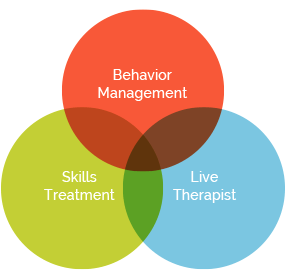
Genesis provides behavioral intervention and treatment in different forms depending upon each child’s and family’s needs. Funding for these programs is most often provided by health insurance, local school districts, SELPAs, and/or regional centers.
Check with your provider and plan for specific coverage and benefits eligibility. Genesis is currently accepting most insurance plans. For any insurance questions, please call 636-775-4894 and we will happy to help you with your insurance questions.
Testimonials
What parents say about us
Lani Willey
Lani talks about the diagnosis and treatment experience with her adopted son, Mathew.
Shirley Nutt
Shirley talks about the treatment of her son, Wyatt, who was diagnosed at age 5.
The Genesis Behavior Center program has enabled my son to become the most loving child. People are able to see what a great person he is. He is now able to go out in the world and be happy with himself.

When I think about my son and his participation in Genesis Behavior Center, I cannot fathom where he would be without them.

I would definitely, 1,000 percent recommend Genesis Behavior Center without hesitation. And I would do it again for my son, and I still use the techniques I’ve learned.

You must be logged in to post a comment.